Do you remember the stories of the light tower that burned when sailors returned? Back then, the village sent only one ship out at a time. Every man was expected to go on one of these trips in his lifetime, as they were made to familiarize future leaders with the world that surrounded our small island. It was, in a way, a rite of passage. “Go forth and experience the sea, where every creature is a part of the continuing existence of every other creature.”
When the tower would shine, mothers and children would run to the shores, eager to catch a glimpse of their loved ones climbing from the ship onto the dock. Any leftover goods from the voyage would be removed from the deck in large wooden crates, tied up in thick ropes and lowered to the men who’d be waiting on the ground. The crates would be distributed among food houses across the village to be examined for quality and added back to each family’s storeroom. The men would then hold their children close and tell them stories of the magical things they’d seen in the world. Things such as squids the size of mountains, lights twinkling in the waves at night, and whales and dolphins that would swim beside the ship as if it were family. Though they never saw any more people, sometimes they would catch a glimpse of another ship that would disappear just as quickly as it had emerged from the mist.
Those evenings, mothers and wives would throw large parties with long buffets filled with the best harvested grains and butchered animals the village had to offer. Sailors, sons, fathers, and brothers would get together and play music late into the evening while women tended to the fires and scolded the children for playing too close to the flames. When our little village touched a new area of the world and came back to the island, it was always a time to celebrate.
Though, sometimes, fathers and husbands did not return. Those men were said to have followed the siren’s song, becoming victims of the sea. Our people knew not to ask what really became of them, lest we be told an awful story of our family members succumbing to insanity, hunger, or treachery. No, we mourned them in ignorance of what took their lives because we knew it was better that way- a silent respect for who they were before the ocean had bewitched their souls.
Sometimes whole ships failed to come back, sunk right alongside the magical stories they’d been planning to share with their little ones. Often, after a year of waiting, the village would hold a mourning ceremony for the lives lost- digging a single grave, then placing a stone inside for every man who’d been on board. They buried the stones and placed a small marker over the plot. Families were encouraged to visit the site yearly to pay their respects, but many would refuse, choosing instead to hold on to the hope that their sailor would come back one day. They never did, and the village would often be tasked with building a new boat for the next generation of sailors to take over- taught by their grandfathers rather than their fathers or older brothers.
The ritual of sending men out to the sea ended shortly after one such failed return. The mourning ceremony took place just before our village became host to a highly contagious disease that took so many of our people away from us. In dealing with the mass shortage of our population, we couldn’t sacrifice any resources or men to the task. We became isolated, and many of us who grew to be the future leaders found ourselves afraid of the sea. We moved our village far from the shores, believing the sea had brought the infection somehow. Decades passed. Soon, children were discouraged from playing near the beaches and forgot about the giant squid. Elders no longer possessed the skills to sail, and stopped telling stories of the sea. Our light tower, weighed down by the ocean’s salts, stood stoic but forgotten.
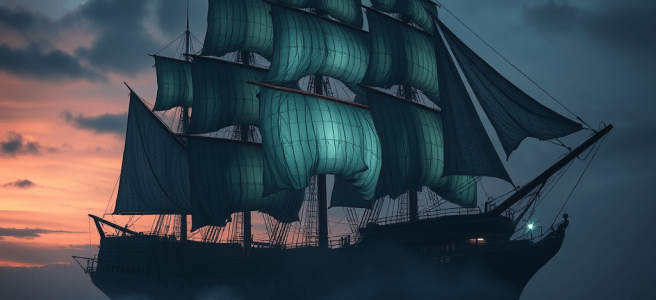
That is, until one late winter’s evening when our people were woken by a light so bright, they believed the sun had risen early. When the village leaders sought the source of the beam, they found our tower lit near the edge of the island. Suddenly, those leaders who’d been taught to fear the sea found themselves face to face with it and with a ship larger than anything the leaders had ever seen.
The markings at the bow were written in an unnervingly familiar script, and the sails were aged and weathered- decorated with tears from every direction. The wood of the ship looked just as worn out, some parts bleached white by the sun and others stained dark by the waves. It groaned loudly as it swayed to and fro, leaving those watching with their hands clenched tight.
Below the ship stood dozens of young men tying ropes to the posts of an old dock. They seemed to have just come of age- barely growing beards from their youthful jaws. These men acted without concern for those watching- moving quickly from the freshly knotted ropes to the stern of their ship. With confident strength, they placed wooden crates at the edge of the dock in small stacks until no more crates were lowered down. The village leaders, escaping their curious daze, called out to the men but did not receive any response. Instead, the men began waving and smiling at the island. They bent down and lifted invisible children into hugs, tenderly kissed invisible wives, and patted invisible friends on their backs. The only hint of recipients to these gestures were shadows on the sand- moving with the sailors to receive their greetings.
Then, as quickly as they’d said their hellos – the men were turning back to the docks, untying their knots, and preparing their goodbyes. The ship disappeared into the fog, and the light from the tower went out.
The leaders stood in awe of the vision they’d just seen. In the many years of our ancestors surveying the sea before our plague took us from the ocean, there had never been stories of others. So, who were these people and where did they come from? What was in the crates? Why had they been left here now? How did the tower light itself, and after so many years of neglect?
The leaders discussed these questions among themselves for many hours before opening up to the rest of the village about the experience. It was eventually agreed that a group of elderly men would examine the items left in the crates. If any harm should come to them, they believed, at least they’d lived long and happy lives.
But these fears were unsupported. The crates were filled with various herbs and fruits, all fresh and completely new to our people, and a single compass that always pointed southwest. They took the contents back to the village and stored them in a small hut to be studied. They locked the compass away. It wasn’t until a week had passed, when a familiar disease had found its way into the lungs of several children, that we then learned what the herbs and fruits were for. As each person came down with the illness that had once brought our entire population to the brink of extinction, they were treated by the salvaged bounty of the sea and healed quickly.
They say that the ship was a phantom vessel, manned by the ghosts of past sailors who had bargained with the gods to visit their home one last time. Others saw it as the sea reminding us of our heritage, and of what bounties await those who explore. Many believed it didn’t happen at all, despite the miracles that followed. And many more decided to build another boat – for they believed that the sea had not taken our future from us. No, it had only been waiting for us to find the courage to sail again, so that it may reward us with yet more treasures.
 CaliStray